
The Story of Skagen’s Old Warehouses – From Fishing to Cultural Heritage
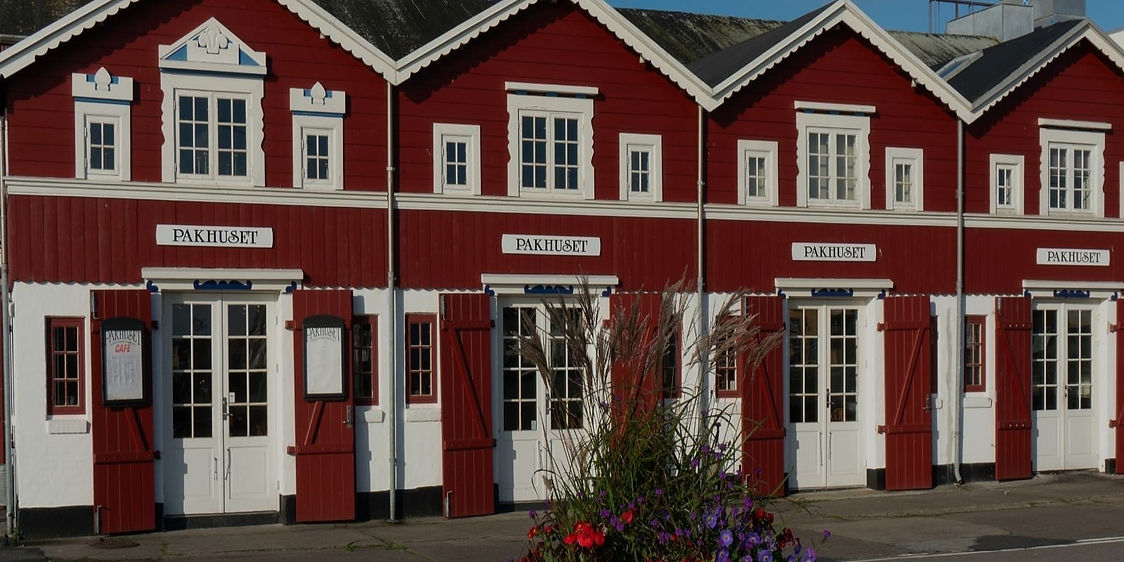
When you take a walk along Skagen’s marina, you will encounter the distinctive old warehouses, which today form the setting for restaurants, cafés, and experiences — including Restaurant Pakhuset.
Their origins date back to a time when Skagen was developed as a modern fishing port and a hub for intensive fishing in the northernmost part of Denmark.
These historic buildings are a living testament to Skagen’s maritime past and the role the town has played in both local trade and fishing for more than a century.

The Warehouses and the Harbour – A New Era Began
In the early 1900s, fishing in Skagen was rapidly growing, and the need for a modern harbour was significant. Skagen Harbour was officially put into use in 1907, and already the following year the first fishing warehouses were ready for operation.
The architect Thorvald Bindesbøll designed both the harbour warehouses and the surrounding facilities, drawing inspiration from classic Nordic harbour architecture such as that found in Bergen and Trondheim.
The red wooden buildings with their characteristic gables were constructed between 1905 and 1907 and were used for storing fishing equipment, salt, ice, and catches before further distribution. The warehouses became an essential part of the infrastructure that helped establish Skagen as one of Denmark’s most important fishing ports.
From Workplace to Tourist Attraction
As fishing developed, Skagen’s harbour environment also changed. Machinery, larger vessels, and modern facilities made the old warehouses less necessary for their original purpose — but no less important as part of the town’s identity.
Today, the warehouses are among Skagen’s most iconic architectural environments, and many have been transformed into restaurants, shops, and cafés — where visitors can experience culture, gastronomy, and history in a single visit.
Restaurant Pakhuset itself holds a special place in this story. The building was designed by Thorvald Bindesbøll and constructed in the early 1900s, at the same time as the harbour was established, and it still carries both historical traces and modern cultural use.
On the façade and inside the restaurant, you can still see and experience elements from Skagen’s maritime past — for example, faithful replicas of figureheads collected and preserved through local history.
Architecture and Culture – Why the Warehouses Matter
The old warehouses stand as a reminder of a time when Skagen routinely handled large volumes of fish and equipment in a busy international maritime environment. Their design — often with gabled roofs facing the quay — is no coincidence. It was inspired by Nordic trading posts and harbours in countries such as Norway and Sweden, where the same architectural style was used to combine functionality with durable construction.
Today, the warehouses serve as cultural landmarks for both locals and visitors, and they are a natural part of any visit to Skagen, especially for those who want to experience both the town’s history and the atmosphere of the harbour — from its original fishing activities to modern gastronomy and events.

Experiences with Historical Roots
Exploring the old warehouses is one of the most authentic ways to experience Skagen in 2026, because you don’t just see buildings — you experience a living piece of cultural history. Take a walk along the quay, read the old facades, and imagine what life was like for the fishermen, traders, and sailors who once made Skagen a busy harbour town.
For many visitors, these historic buildings are almost as iconic as Grenen, Råbjerg Mile, or the Skagen artists’ colony — and they are a must-see if you want a complete understanding of the town.